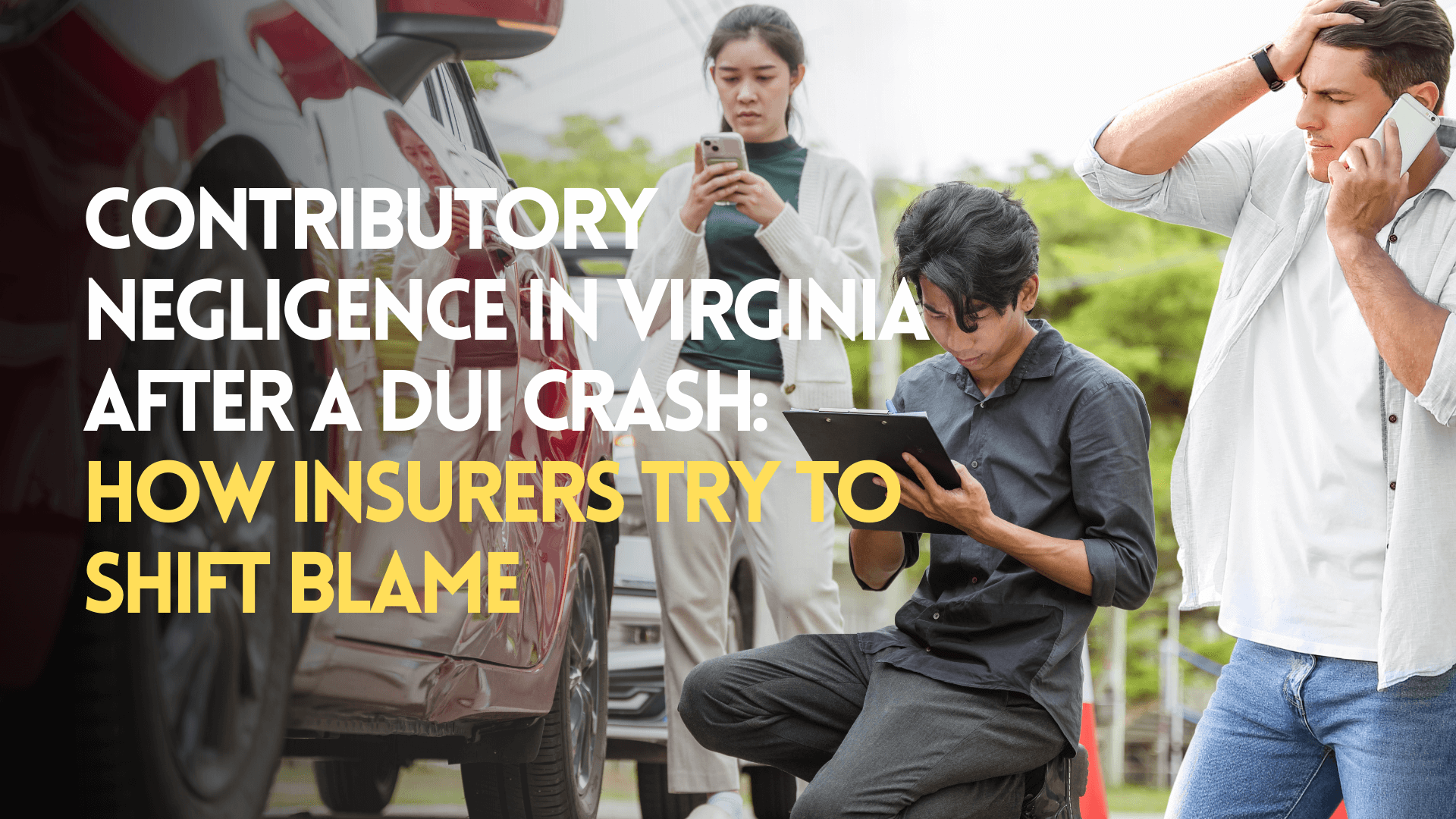
A drunk driver caused the crash. So why does the insurance company keep asking questions that make it sound like you did something wrong?
Because in Virginia, fault arguments can be a fast track to denying a claim. Even when alcohol is involved, insurers may still look for ways to shift the spotlight onto you. That is why understanding contributory negligence, and the tactics used after DUI crashes, matters so much for injury victims in Chesapeake and across Hampton Roads.
This guide breaks down what contributory negligence means in real life, how blame gets “manufactured,” and what you can do early to protect your claim.
What Is Contributory Negligence and Why Does It Matter in Virginia?
In plain English, contributory negligence is the argument that the injured person contributed to the crash. The reason this comes up so aggressively in Virginia is simple: insurers often treat any share of fault as leverage to reduce what they pay, or to deny liability entirely.
That does not mean every insurer automatically wins with that argument. It does mean the argument shows up early and often, especially when injuries are significant and the claim has real value.
“But the Driver Was Drunk.” Why Blame-Shifting Still Happens
Many people assume a DUI arrest makes the injury claim automatic. It is not. A criminal case (DUI) and a civil injury claim are separate tracks. The civil side still focuses on:
- How the crash happened (liability)
- The extent of your injuries (damages)
- What evidence supports both
When insurers see a drunk driver, they may still try to reduce exposure by arguing:
- You could have avoided the crash
- You were driving too fast for conditions
- You were distracted
- You did something unsafe right before impact
- Your injuries are “not from this crash”
It is not always fair. It is often predictable.
The Most Common Ways Insurers Try to Pin Fault on DUI Crash Victims
“You were speeding.”
Speed is one of the easiest accusations because it sounds objective. But insurers may base it on:
- A guess from the other driver
- A witness estimate
- Vehicle damage assumptions
- Selective reading of the crash report
What helps: scene photos, vehicle data (when available), objective measurements in reports, and consistent witness statements.
“You should have avoided it.”
This shows up as: “If you were paying attention, you could have braked,” or “You should have seen them coming.”
The problem is that DUI crashes often involve sudden, unpredictable behavior: wrong-way driving, sudden lane departures, red-light running, or delayed reactions. Insurers may still try to argue hindsight as if you had a crystal ball.
What helps: intersection layout photos, lighting conditions, time/distance realities, and any available video.
“You changed lanes / merged improperly.”
If the crash involves a lane change or merge, insurers may try to make it a shared-fault case even when the drunk driver was driving erratically.
What helps: damage patterns, point of impact, witness statements, and video. Early investigation matters because vehicles get repaired and evidence disappears.
“You were distracted.”
Phones are the modern scapegoat. Even if you were not distracted, insurers may fish for:
- Phone records
- Social media timestamps
- Casual statements like “I looked down for a second”
What helps: being careful with statements and letting evidence speak for itself.
“Your injuries were pre-existing.”
Even if you had a prior back issue or old knee injury, that does not automatically erase a new injury or a worsening condition. Insurers may try to frame legitimate problems as “not from this crash.”
What helps: baseline medical history (when relevant), clear treatment timeline, and providers documenting how symptoms changed after the collision.
Recorded Statements: Where Blame Gets “Created”
After a DUI crash, insurance adjusters may push for a recorded statement fast. The timing is not random. Early on, victims often:
- minimize symptoms (“I’m okay”)
- guess about details
- speak while stressed or medicated
- try to be cooperative and fill in gaps
That is how harmless phrases become claim problems:
- “I didn’t see them until the last second.”
- “I might have been going a little fast.”
- “It happened so quickly, I’m not sure.”
If you are unsure what to say, it is reasonable to decline a recorded statement until you have medical clarity and legal guidance.
Evidence That Helps Shut Down Blame-Shifting
Contributory negligence arguments thrive in the absence of hard proof. The earlier evidence is preserved, the harder it is for the story to be rewritten.
Crash scene evidence
- Photos of the scene (signals, signs, lane markings)
- Skid marks, debris fields, resting positions (if you can capture them safely)
- Weather and lighting conditions
- Visible injuries and vehicle damage
Witnesses
Independent witnesses can be a claim’s best defense against blame games. Get:
- names and phone numbers
- where they were standing/driving
- what they saw first (before impact), not just the crash moment
Video
Footage can be decisive, but it is often deleted or overwritten quickly. Possible sources include:
- nearby businesses
- traffic cameras (availability varies)
- residential doorbell cameras
- dashcams
Medical documentation
Insurers love to argue: “If it was serious, you would have treated right away.” Early care and consistent follow-up help:
- link injuries to the crash
- show symptoms and limitations clearly
- reduce “gap in treatment” arguments
A simple symptom and activity log
Write down what changed after the crash:
- sleep problems
- headaches, dizziness, nausea
- pain triggers
- driving anxiety
- missed work and restrictions
- activities you cannot do normally
This is especially helpful when symptoms are not visible, like concussion-type issues.
What to Do If You Think the Insurer Is Trying to Blame You
- Stop guessing in conversations. If you do not know something, it is okay to say you do not know.
- Do not downplay symptoms. You can be tough and still be injured.
- Gather documents early. Crash report info, medical records, wage loss proof.
- Avoid social media “proof of life” posts. Insurers may cherry-pick smiling photos to argue you are fine.
- Get legal guidance before signing anything. Early releases and quick settlements often come before the true injury picture is clear.
Why This Matters Even More in DUI Injury Claims
DUI cases can involve serious injuries: fractures, head injuries, spinal injuries, and long recoveries. The higher the stakes, the more aggressive the defense strategy tends to be.
Blame-shifting is not always about the truth. It is often about leverage.
When to Talk to a Chesapeake DUI Accident Attorney
Consider calling an attorney if:
- the insurer is pushing hard for a recorded statement
- you are hearing “shared fault” language early
- you have real medical treatment or missed work
- the story is changing
- there is a question about uninsured/underinsured coverage
- the crash involves multiple vehicles or unclear sequence
Early help can focus on preserving evidence, organizing documentation, and keeping the case from getting derailed by avoidable mistakes.
If you were injured in a drunk driving crash in Chesapeake or Hampton Roads and the insurance company is already hinting that you share blame, it is worth getting clarity before the story gets flipped.
Contact Bordegaray Injury Law for a Free Consultation: call 757-505-HURT (4878) or visit nbinjury.com.
No Fee Until We Win.
