
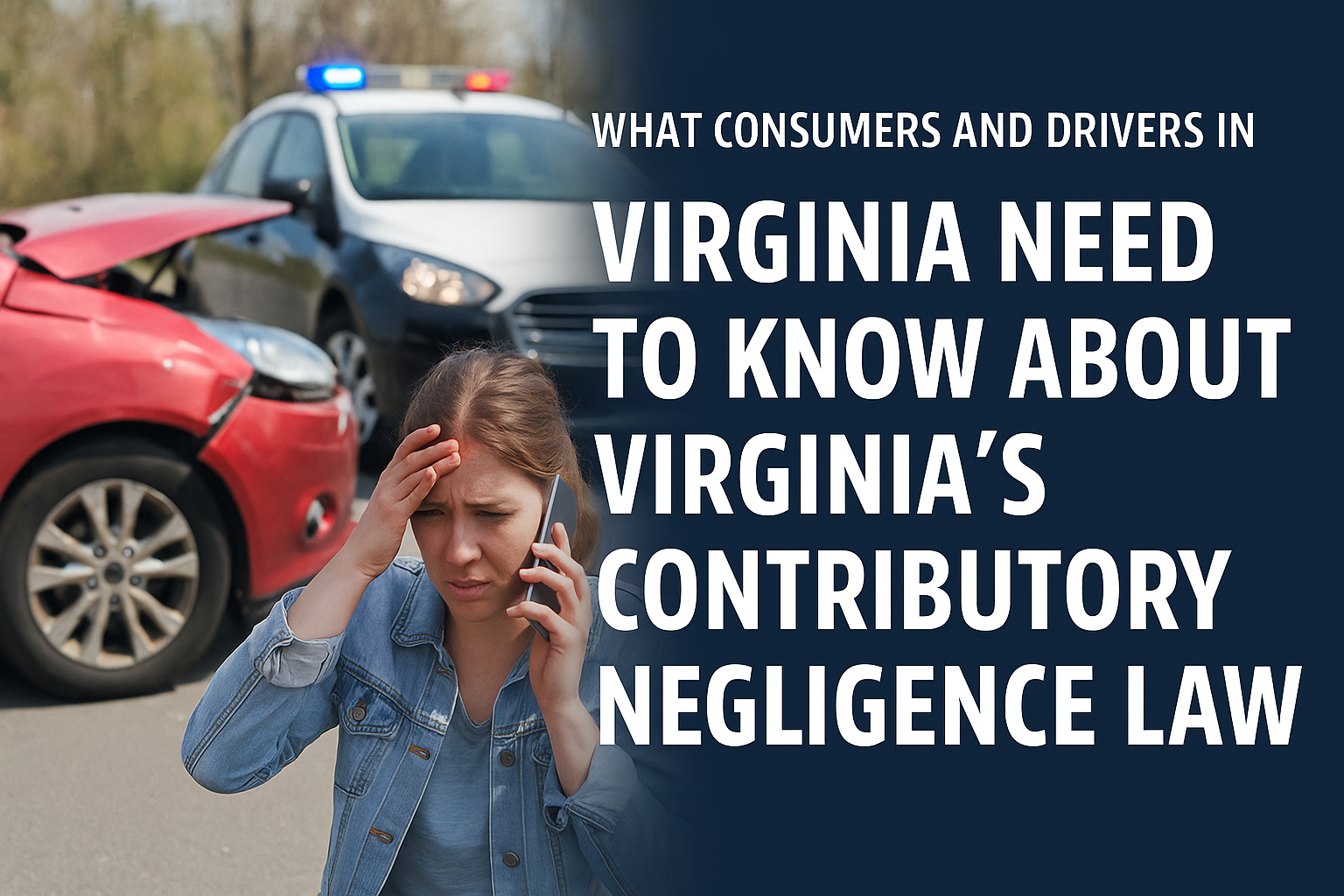
If you are involved in a car accident in Virginia, one of the first legal concepts that can determine whether you recover any compensation at all is contributory negligence. Most states follow some version of comparative negligence, which allows injured parties to recover damages even if they were partly at fault. Virginia is one of only a handful of states that takes a far stricter approach.
What Is Contributory Negligence?
Under Virginia law, if you are found to be even 1 percent at fault for an accident, you are barred from recovering any compensation from the other driver, even if they were 99 percent responsible. This means that insurance companies and defense attorneys only have to prove the slightest degree of negligence on your part to avoid paying your claim.
Example:
If you are hit by a speeding driver but you failed to signal a lane change beforehand, the court or insurance adjuster could determine that your failure to signal contributed to the accident. That 1 percent of fault is enough to prevent you from recovering damages for your injuries, vehicle repairs, lost wages, or pain and suffering.
How Fault Is Determined
In Virginia, fault is determined by evidence such as police reports, witness statements, accident reconstruction, photos, and expert testimony. The insurance adjuster or, if the case goes to court, the judge or jury will decide whether your actions contributed in any way to the accident. Common actions that may lead to a contributory negligence defense include:
- Speeding or driving too fast for road conditions
- Distracted driving such as phone use, eating, or adjusting controls
- Failing to signal turns or lane changes
- Not yielding when required
- Driving with defective equipment such as non-functioning brake lights
Why This Matters for Your Claim
Because the contributory negligence standard is so unforgiving, insurance companies often use it to deny claims or pressure injured drivers into accepting low settlements. If they can point to any contributing fault, no matter how minor, they may refuse payment entirely.
This makes accident cases in Virginia high stakes for injured parties. Even small details can make or break your claim.
Steps to Protect Your Rights After an Accident
- Call the police and get an accident report. Objective documentation is critical.
- Gather evidence immediately. Take photos of vehicle damage, skid marks, traffic signals, weather conditions, and injuries.
- Get witness information. Independent accounts can counter attempts to shift blame onto you.
- Seek medical attention right away. Delays in treatment can be used to question the severity or cause of your injuries.
- Avoid making statements that admit fault. Even polite comments like “I’m sorry” can be used against you later.
- Consult an attorney early. A lawyer experienced in Virginia personal injury law can help identify and rebut contributory negligence arguments before they derail your case.
Bottom Line
In Virginia, contributory negligence is a harsh rule that can completely block your recovery for accident-related losses. Understanding how it works and taking steps to avoid even partial fault can mean the difference between receiving full compensation and getting nothing at all.
