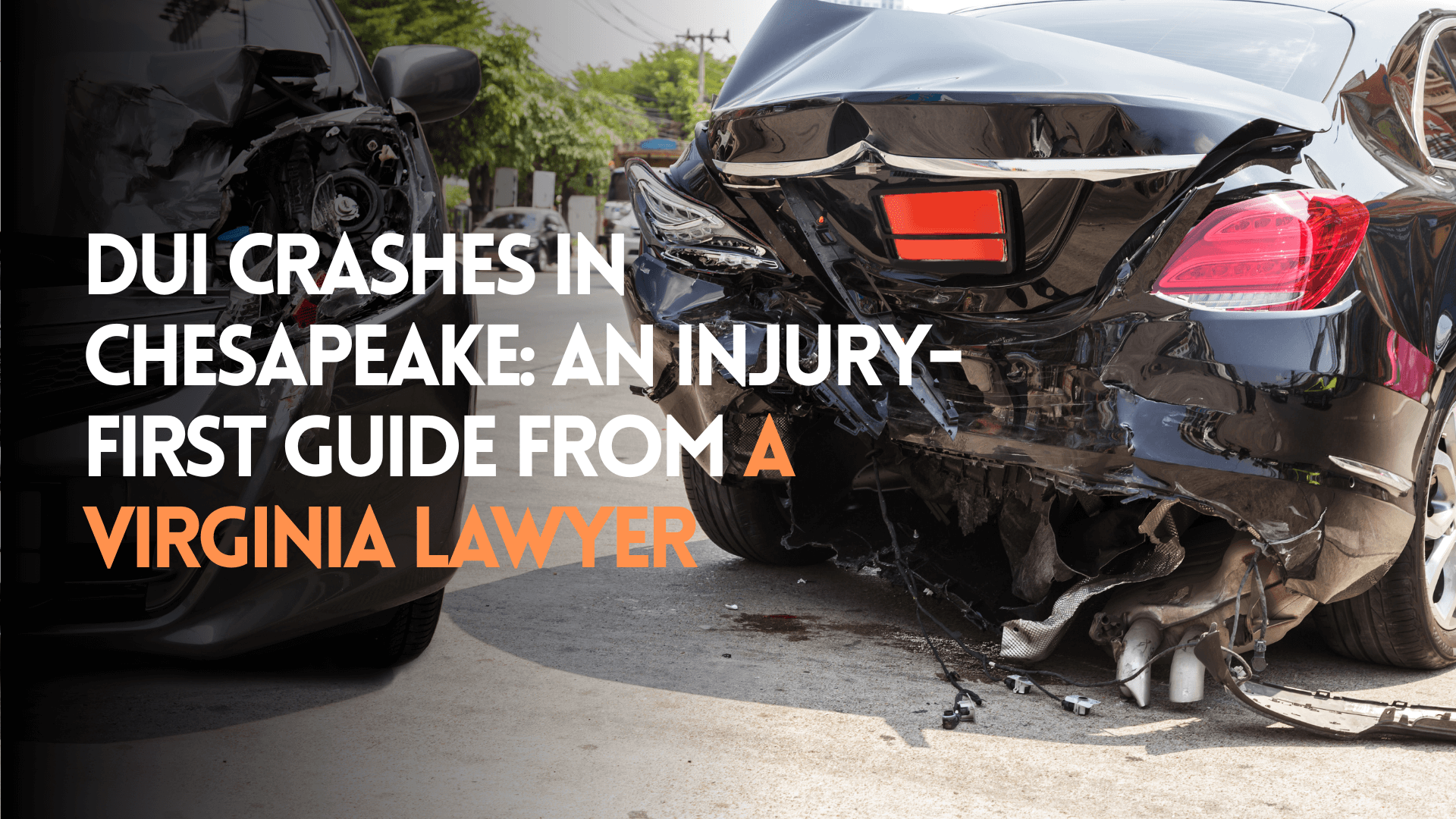
You did not choose to share the road with an impaired driver. Yet here you are, dealing with pain, appointments, bills, lost time, and an insurance process that can feel upside down. If a drunk driver caused your crash in Chesapeake or anywhere in Hampton Roads, you deserve clear steps, practical answers, and an advocate who knows how insurers work from the inside. I wrote this guide to help you protect your health, your claim, and your future.
As an experienced Virginia DUI accident lawyer, I speak directly to people like you every day. My focus is simple. I help injured victims build strong claims, hold drunk drivers accountable, and pursue full compensation. I offer a free consultation and I do not charge attorney’s fees unless I recover for you. Keep reading to understand what matters most after a DUI crash and how I can help.
What Makes a DUI Car Crash Different From Other Collisions
A crash caused by alcohol or drugs is not just another “accident.” It is a preventable event with unique legal angles that can increase the value of your claim.
Higher severity of injuries.
Impaired drivers often speed, drift across lanes, or fail to brake. That raises the risk of traumatic brain injuries, spinal injuries, fractures, and lasting pain. If you are a motorcyclist or a pedestrian, the lack of protection magnifies those risks.
Evidence of impairment.
Breath or blood alcohol content, field sobriety tests, officer observations, dash or body camera footage, bar receipts, and witness testimony can help prove the drunk driver’s fault and support punitive damages in the right case.
Potential punitive damages.
Virginia law allows punitive damages in limited circumstances to punish egregious conduct and deter it in the future. Driving while intoxicated can support a claim for punitive damages if the facts meet the legal standard. I evaluate this from day one.
Parallel criminal and civil cases.
The Commonwealth may prosecute the drunk driver. That criminal case is about guilt and punishment. Your civil claim is about your medical care, lost income, pain, and long-term impact. These tracks move separately, but the criminal evidence can strengthen your civil case. I coordinate timing and strategy so you do not miss opportunities.
Your First 10 Steps After a DUI Crash in Chesapeake
You do not have to do everything perfectly to have a strong claim. Focus on safety and documentation. These steps help protect you.
- Call 911 and report suspected impairment. A prompt police response preserves critical evidence.
- Get medical care immediately. Adrenaline hides symptoms. Early evaluation creates a clear link between the crash and your injuries.
- Tell providers about every symptom. Headaches, dizziness, neck pain, back pain, tingling, anxiety, sleep issues. If it hurts or feels different, say it.
- Collect basic scene details if you can do so safely. Photos of vehicles, skid marks, debris, traffic signals, and the driver’s behavior matter.
- Identify witnesses and save their contact information. Independent voices can be powerful.
- Do not argue with the other driver. Impairment can make people unpredictable. Let police handle it.
- Do not give a recorded statement to any insurer before you speak with me. Insurers are trained to minimize claims, and every word matters.
- Follow medical advice and keep all appointments. Gaps or missed visits become tools insurers use to downplay injuries.
- Track your damages. Save bills, receipts, pharmacy records, mileage to appointments, and a simple pain journal.
- Call me for a free consultation. I will listen, explain your options, and map a plan to protect your claim.
The Evidence That Moves the Needle in a DUI Injury Case
The stronger your evidence, the clearer your path to fair compensation. I build cases with a focus on the following categories.
Police and criminal records.
Arrest reports, citations, breath or blood results, chain of custody documentation, dash and body camera footage, and preliminary hearing transcripts can support liability and punitive damages.
Medical proof.
ER records, imaging, specialist notes, physical therapy documentation, and future care plans show the full scope of your injuries. I also gather treating physician opinions about causation and permanency when appropriate.
Accident reconstruction.
Photos, vehicle black box data, crash diagrams, and witness statements help prove speed, braking, lane position, and impact forces. In serious cases I bring in a reconstruction expert.
Alcohol source evidence.
Bar receipts, credit card logs, surveillance video, and phone data can corroborate impairment. Virginia has limited dram shop liability, but this evidence still strengthens the story of reckless conduct and supports punitive damages.
Your story.
You are more than diagnostic codes. I document how pain, restrictions, anxiety, sleep issues, and missed life events affect your days. This is crucial for non-economic damages.
How the Criminal Case Affects Your Civil Claim
You are not a prosecutor, and you do not control the criminal case, yet it can help you.
Timing and cooperation.
I coordinate with the Commonwealth’s Attorney’s office as needed to obtain public records and monitor key dates. A guilty plea or conviction can simplify liability arguments in your civil case. Even if the criminal case results in a different outcome, I pursue civil accountability using the full record.
Fifth Amendment implications.
If the drunk driver faces criminal exposure, they may refuse to answer questions in the civil case. I use other evidence to fill gaps and maintain pressure.
Restitution versus damages.
Restitution in criminal court is not the same as civil damages. It rarely covers the full value of medical bills, lost wages, pain, and future care. Your civil claim is the path to full compensation.
Understanding Fault, Contributory Negligence, and Insurance in Virginia
Virginia uses a contributory negligence rule. That means if an insurer can prove you were even slightly at fault, it may try to deny compensation. I take this seriously in every case.
What if the drunk driver rear-ended you?
Rear-end faults are usually clearer, but insurers still look for ways to shift blame. I lock down witness statements and physical proof early.
What if you were a passenger?
You can pursue a claim even if the impaired driver was the person driving the car you rode in. I examine all available coverage, including the driver’s liability policy and your own UM or UIM coverage.
What if the drunk driver had no insurance or not enough?
Your uninsured or underinsured motorist coverage can step in. I handle the claim against your insurer just as assertively as I would against the at-fault driver’s insurer.
Commercial vehicle or rideshare?
If a commercial driver was impaired, additional policies and employer liability may apply. I move quickly to preserve logs, electronic data, and employer policies.
Motorcycle, pedestrian, or bicyclist cases.
These collisions often cause severe injuries. I focus on visibility, speed analysis, and human factors to prove fault and the full value of non-economic damages.
Damages You Can Pursue After a DUI Crash
Every case is unique, but the categories below apply broadly.
- Medical bills for ER care, imaging, surgery, specialist treatment, physical therapy, injections, and medication.
- Future medical needs such as continued therapy, pain management, or assistive devices.
- Lost income and reduced earning capacity if injuries limit your work.
- Pain and suffering for physical pain, mental distress, and loss of enjoyment of life.
- Scarring or disfigurement when visible injuries affect daily life and confidence.
- Property damage to your vehicle and personal items.
- Punitive damages when the evidence shows a reckless disregard for safety.
- Wrongful death damages for families who lost a loved one, including funeral costs, loss of companionship, and more.
I document these damages in detail and present them in a way insurers cannot ignore.
Statute of Limitations and Key Deadlines
In Virginia, personal injury claims from a car crash generally have a two-year statute of limitations. Wrongful death claims have their own deadline measured from the date of death. Insurance notice deadlines can be much shorter, especially for UM or UIM coverage. Evidence goes stale quickly. Surveillance video can be overwritten in days. Vehicles get repaired or destroyed. I send preservation letters early and keep you ahead of deadlines.
How I Work With Insurance Companies
Before I represented injured people, I handled claims from the other side. That experience helps me anticipate the playbook and protect you from common tactics.
- I control communications. Insurers do not get a recorded statement from you unless it helps your claim.
- I organize proof. Clean medical timelines, clear causation opinions, and honest documentation reduce excuses to delay or deny.
- I value the case realistically. I study your medical trajectory, your day-to-day limitations, and the venue. Then I explain a range that makes sense.
- I negotiate from strength. I do not accept the first offer. I push for a settlement that matches the evidence.
- I prepare for litigation. If fair value is not on the table, I file suit and keep building pressure.
My goal is to combine thorough preparation with respectful, steady advocacy. You should feel informed and supported at every step.
Medical Care and Recovery: Building a Timeline That Supports Your Claim
Your health comes first. The second priority is documenting a consistent recovery path that insurers cannot pick apart.
Follow through with specialists.
ER discharge is not the end of care. If you need orthopedics, neurology, pain management, or mental health support, I encourage you to follow those referrals.
Physical therapy and home exercises.
Skipping sessions makes it harder to prove persistent pain or loss of function. I want your records to show effort and progress.
Document daily impact.
A brief journal helps. Note sleep problems, flare-ups, missed activities, and work limitations. These entries are powerful when described in your own words.
Avoid social media traps.
A single photo can be taken out of context. Insurers comb through posts looking for ways to downplay injuries. Consider going quiet until your claim is resolved.
Special Situations I Handle
Passengers injured by a drunk driver.
You have rights even if the impaired driver is a friend. I evaluate all available policies and explain how to pursue compensation without unnecessary conflict.
Uninsured or underinsured drunk driver.
Your UM or UIM coverage can make the difference. I notify your carrier, preserve rights, and pursue the claim to the policy limits when justified.
Commercial vehicle DUI.
Company policies, training records, and electronic logs become urgent targets. I move fast to preserve them.
Motorcycle, pedestrian, and bicycle crashes.
I highlight visibility issues, impaired reaction time, and impact forces to show why your non-economic damages should be higher.
Catastrophic brain and spinal injuries.
I coordinate life care planning and vocational opinions when needed to prove long-term costs and lost earning capacity.
Wrongful death.
I guide families through an extremely difficult process with compassion and focus. I protect deadlines while you grieve.
Frequently Asked Questions About DUI Injury Claims in Virginia
Do I have a claim if the drunk driver was not convicted?
Yes. The burden of proof in a civil case is different from a criminal case. I can use police records, witness statements, medical evidence, and other proof to pursue compensation even if the criminal outcome is not a conviction.
Should I talk to the other driver’s insurer?
Not before we speak. Adjusters are trained to collect statements that reduce claim value. I handle those conversations for you.
What if I was a little sore but did not go to the ER right away?
You can still have a claim. Get checked as soon as you can, explain the delay, and start a clear treatment plan. I have handled many cases where symptoms grew in the days after the crash.
How long will my case take?
It depends on your medical recovery, the strength of liability proof, and the insurer’s cooperation. Rushing to settle before you understand your injuries can cost you. I balance speed with accuracy.
How much does a DUI accident attorney cost in Virginia?
I work on a contingency fee. You pay no attorney’s fees unless I recover for you. I provide the fee structure in writing and answer every question you have.
Can I recover punitive damages?
Possibly. It depends on the facts and the legal standard for reckless conduct. I evaluate this early and build the evidence needed to support a punitive claim where appropriate.
What if a loved one died because of a drunk driver?
A wrongful death claim may be available. I will explain who can file, what damages are recoverable, and how the process works.
How I Prove the Value of Your Case
Insurers frequently accept that a drunk driver caused the crash, then argue about how badly you were hurt. I focus on the real-world story behind the records.
Clear medical timeline. I assemble a day-by-day record that connects the crash to your symptoms, diagnoses, treatment, and future needs.
Functional losses. I document what you can no longer do or what now takes extra effort. I tie those losses to the medical evidence.
Work impact. Pay stubs, employer letters, and vocational assessments show the true cost of missed time and reduced capacity.
Future harm. If you face a long recovery or permanent limitations, I bring in the right experts to explain future medical costs and life changes in plain language.
Local Focus: Chesapeake and Hampton Roads
Local context matters. I know the roadways, intersections, and patterns where DUI crashes happen in this region. I work with local providers and understand how to obtain records from area hospitals and law enforcement.
That familiarity helps me move faster and anticipate the next step. If you live in Chesapeake, Virginia Beach, Norfolk, Portsmouth, or nearby communities, I can meet you where it is convenient and keep the process simple.
How to Choose the Best DUI Accident Lawyer for Your Situation
You have many options. Here is what I recommend you consider.
Experience with DUI injury claims.
Ask about cases that involved impaired drivers, punitive damage claims, and coordination with criminal proceedings.
Comfort with insurers.
Background handling claims from the other side helps anticipate strategies and avoid traps.
Communication style.
You should feel heard, informed, and respected. I keep you updated and explain each step in plain English.
Results mindset.
Look for a lawyer who prepares every case as if it may go to trial. That approach strengthens negotiation.
Free consultation and contingency fee.
You should be able to talk through your case without pressure or upfront costs.
Step-By-Step: What Working With Me Looks Like
- Free consultation. You tell me what happened and what hurts. I answer your questions and outline options.
- Investigation and preservation. I secure police reports, photos, video, and medical records. I send preservation letters for footage, black box data, and other evidence.
- Medical coordination. I track your treatment and make sure your records reflect your full symptoms.
- Claim presentation. When your medical picture is clear, I prepare a demand package with evidence, analysis, and a fair valuation.
- Negotiation. I push for a settlement that matches the proof. I explain every offer and never pressure you to accept less than your case is worth.
- Litigation if necessary. If the insurer will not be reasonable, I file suit and continue building the case toward trial.
Throughout the process, I stay accessible. You get direct guidance and honest feedback so you can make confident decisions.
Common Insurance Tactics After a DUI Crash
You deserve to know what you may face.
Quick low offers.
Early offers try to settle before you know the full extent of your injuries. I advise you when an offer is premature.
Blaming prior conditions.
Insurers love to point to old injuries. I use medical opinions to distinguish prior issues from new trauma.
Questioning treatment.
Missed appointments or gaps in care become excuses to cut value. I help you keep a clean record and avoid pitfalls.
Downplaying pain and mental health.
Anxiety, nightmares, and mood changes are real after trauma. I make sure they are documented and valued.
Your Next Move
You did not ask for this. You do not need to go through it alone. If a drunk driver injured you in Chesapeake or anywhere in Virginia, you can take control today.
- Get the medical care you need.
- Keep your records and follow through.
- Let me deal with the insurance companies.
I bring prior experience against insurers, a personal and accessible approach, and a results-focused strategy to every DUI injury claim. Your consultation is free. You pay no attorney’s fees unless I recover for you.
Call today to speak with an experienced Virginia DUI accident lawyer about your case.
