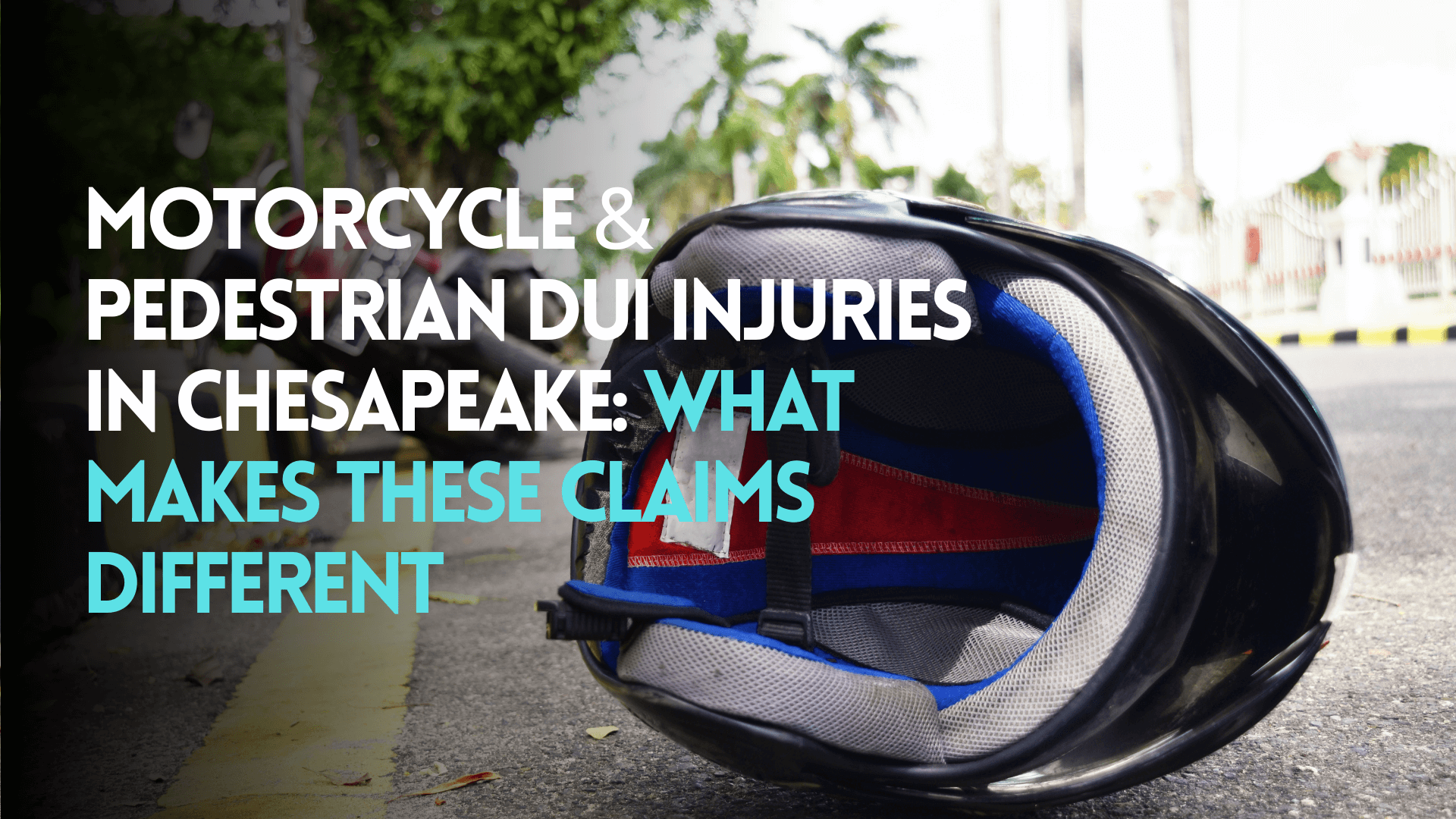
You should not have to share the road with an impaired driver. If you were hit while riding a motorcycle or while walking, your injuries can be life changing. You may be in pain, missing work, and dealing with an insurance process that feels stacked against you. I wrote this guide to explain why motorcycle and pedestrian DUI cases in Chesapeake are different, what strengthens your claim, and how I fight for full compensation. I offer a free consultation, and you do not pay attorney’s fees unless I recover for you.
Why DUI Crashes Hit Motorcyclists and Pedestrians Harder
A drunk driver makes bad decisions and slower reactions even worse. On a motorcycle or on foot, you carry little or no physical protection. That combination creates a higher risk of serious harm.
No protective shell.
A car has a frame, airbags, and crumple zones. Your body does not. In a DUI crash, impact forces transfer to you. That often means traumatic brain injuries, spinal injuries, fractures, torn ligaments, and long recoveries.
Speed and visibility.
Impaired drivers misjudge speed and distance. They drift across lanes, miss turn signals, or fail to yield. For motorcyclists, this shows up as left-turn crashes, unsafe lane changes, and rear-end impacts at lights. For pedestrians, it often appears as crosswalk violations, curb strikes, and failure to stop at night.
Reaction time.
Alcohol slows perception and response. A sober driver might brake in time. A drunk driver often does not. That increased energy turns a close call into a severe injury.
Higher non-economic harm.
Pain, sleep disruption, anxiety, and loss of independence can be overwhelming after a motorcycle or pedestrian crash. Your claim should reflect the full human cost, not just the bills.
Your First Priorities After a Motorcycle or Pedestrian DUI Crash
You do not need to be perfect. Focus on safety, medical care, and simple documentation. These steps protect you and your claim.
- Call 911 and report suspected impairment. Police documentation and on-scene observations are critical.
- Get medical care now. Head injuries and internal trauma can hide behind adrenaline. Early care links your symptoms to the crash.
- Tell your provider everything. Headaches, neck pain, ringing in the ears, numbness, dizziness, flashbacks, sleep problems. If you feel it, say it.
- Photograph the scene if safe. Vehicle positions, skid marks, broken glass, crosswalk signals, helmet damage, torn clothing, footwear prints, and lighting conditions can matter later.
- Identify witnesses. Names, phone numbers, and any dash cam or home camera locations help.
- Preserve your gear. Do not throw away a damaged helmet, riding jacket, or shoes. These items help prove forces and injury mechanisms.
- Avoid recorded statements to insurers until you speak with me. Every word can be used to minimize your claim.
- Follow the treatment plan. Gaps in care become arguments against you.
- Track your losses. Save bills, prescriptions, mileage to therapy, and missed work notes. Keep a short pain and activity journal.
- Call me for a free consultation. I explain your options and map a plan that fits your situation.
The Evidence That Moves Motorcycle and Pedestrian DUI Claims
Strong evidence shortens arguments and increases settlement value. I look for proof in several categories.
Police and criminal records.
Arrest reports, officer observations, field sobriety testing, breath or blood results, dash and body camera recordings, and court outcomes. Even when the criminal case is pending or takes a turn, I build your civil case with what is available.
Scene reconstruction.
For motorcyclists, I analyze lane position, conspicuity, headlight status, point of rest, and crush damage. For pedestrians, I examine crosswalk signals, stop bar locations, sightlines, and impact points. Diagrams and expert opinions can rebut claims that you “came out of nowhere.”
Video and telematics.
Traffic cameras, business surveillance, home doorbells, dash cams, and event data recorders help confirm speed, braking, and driver behavior. I send preservation letters quickly because many systems overwrite footage within days.
Alcohol source evidence.
Credit card receipts, bar tabs, social media posts, and phone data can corroborate impairment and support punitive damages when the facts fit the legal standard.
Medical proof with function.
Imaging, specialist notes, and therapy records tell part of the story. I connect those records to the daily effects, like standing tolerance, grip strength, balance, and concentration. This is where your journal helps.
Human factors and visibility.
In motorcycle and pedestrian cases, visibility often becomes a battleground. I use lighting conditions, clothing colors, headlight or reflective gear details, and line-of-sight measurements to counter “I did not see” defenses.
Contributory Negligence in Virginia and How I Protect Your Claim
Virginia uses contributory negligence. If an insurer can convince a fact finder that you were even slightly at fault, it may try to deny recovery. I take that reality into account from day one.
Common defense arguments against motorcyclists.
- “You were speeding.”
- “You split lanes.”
- “You were not visible.”
- “You braked too late.”
I challenge these claims with reconstruction, witness statements, and expert analysis. I also highlight the drunk driver’s impairment and decision-making because those facts matter to liability and punitive exposure.
Common defense arguments against pedestrians.
- “You crossed outside of a crosswalk.”
- “You stepped into traffic unexpectedly.”
- “It was dark and you wore dark clothing.”
- “You ignored the signal.”
I gather signal timing data, lighting measurements, and visibility evidence. I document driver sightlines and vehicle speed. The goal is simple. I build a clear path around contributory negligence so your claim survives and thrives.
Punitive Damages and Why DUI Conduct Can Increase Value
Punitive damages exist to punish egregious behavior and deter future misconduct. Driving under the influence can support punitive damages when the facts meet the legal standard, for example when the level of intoxication and the driver’s conduct show a reckless disregard for safety. I evaluate punitive potential early because it changes strategy. Insurers take more notice when punitive exposure is on the table.
Motorcycle Injuries I See Most Often After DUI Crashes
Traumatic brain injuries. Concussions, post-concussive symptoms, and more severe TBIs. Even with a helmet, rotational forces can harm the brain.
Spinal injuries. Herniated discs, fractures, and nerve injuries that create numbness or radiating pain.
Orthopedic trauma. Fractures of the clavicle, ribs, wrists, ankles, and long bones. Road rash with infection risk.
Psychological impact. Anxiety, nightmares, startle responses, and riding avoidance. Mental health is real and compensable.
I make sure your records reflect the full range of symptoms. I help coordinate specialists when appropriate so your timeline is consistent and clear.
Pedestrian Injuries I See Most Often After DUI Crashes
Head and facial injuries. Impact with a hood, windshield, or pavement often causes lacerations, fractures, and dental trauma.
Lower extremity injuries. Tibia and fibula fractures, knee ligament tears, and hip injuries are common due to bumper height.
Spinal and internal injuries. Whiplash mechanisms and blunt trauma can harm internal organs.
Emotional trauma. Many pedestrians struggle with fear of crossing streets or walking at dusk. I value this harm as part of your claim.
Insurance Layers That May Apply
Your recovery often depends on finding every available policy. I look beyond the obvious.
At-fault driver liability. The starting point for compensation.
Uninsured or underinsured motorist coverage. Your UM or UIM coverage can step in when the drunk driver has no insurance or not enough. This can apply to riders and to pedestrians. I trigger coverage promptly and protect your rights under your policy.
Medical payments coverage. MedPay can help with medical bills regardless of fault, up to the purchased limits.
Commercial policies. If the impaired driver was on the job or in a commercial vehicle, additional coverage and employer responsibility may apply.
Third-party maintenance or product issues. In rare cases, a defective part or negligent maintenance contributes to a crash. I stay alert to those clues.
How the Criminal Case Interacts With Your Civil Claim
You do not control the criminal case, yet it can help your civil claim. A guilty plea or conviction can simplify fault arguments. If the criminal case is pending, I plan discovery and depositions with timing in mind. If the driver asserts the Fifth Amendment, I use other evidence to keep your civil case moving. I also make sure you understand that criminal restitution is not a substitute for full civil damages.
Damages You Can Pursue
Every case is unique. These categories commonly apply to motorcycle and pedestrian DUI cases.
- Medical expenses. ER visits, imaging, surgery, hospital stays, specialists, therapy, and medication.
- Future care. Pain management, mental health counseling, injections, assistive devices, or additional surgery.
- Lost income and reduced earning capacity. I use wage records and expert opinions where needed.
- Pain, suffering, and inconvenience. The daily impact on sleep, hobbies, family time, and independence.
- Scarring and disfigurement. Visible injuries carry a specific kind of harm.
- Property damage. Your motorcycle, helmet, riding gear, phone, bicycle, or other personal items.
- Punitive damages. Where the evidence supports reckless disregard for safety.
- Wrongful death. Funeral expenses and family losses when a loved one dies from DUI injuries.
I present damages with documentation and context. Numbers matter, and so does your story.
Statute of Limitations and Preservation
Personal injury claims from a crash in Virginia generally have a two-year statute of limitations, measured from the date of the collision. Wrongful death claims have a deadline measured from the date of death. Insurance notice requirements can be shorter, especially for UM or UIM claims. Video often overwrites in days. Vehicles get repaired or scrapped. I send preservation letters quickly, secure photos and measurements, and make sure deadlines do not slip.
Special Issues in Motorcycle DUI Cases
Helmet and protective gear.
Insurers try to use gear choices against riders. I focus on crash mechanics and medical causation. I do not allow an adjuster to turn safety discussions into blame.
Conspicuity and lighting.
I analyze headlight status, retroreflective surfaces, and surrounding light sources to counter visibility defenses.
Cornering and braking.
I use reconstruction to show why your inputs were reasonable under the circumstances.
Road surface hazards.
Gravel, potholes, and slick paint can combine with an impaired driver’s conduct to create a perfect storm. I explore all contributing factors so the drunk driver does not escape accountability.
Special Issues in Pedestrian DUI Cases
Signal timing and crossing distance.
I use timing data and roadway measurements to rebut claims that you stepped out suddenly.
Midblock crossings.
Even outside a crosswalk, an impaired driver has duties. I gather evidence to show why a sober driver would have avoided the crash.
Nighttime visibility.
I analyze ambient light, headlight aim, and contrast. I show realistic detection distances and driver response times.
Children and seniors.
Age affects gait and reaction. I present that context with care and respect.
How I Work With Insurers After DUI Crashes
Before I represented injured people, I handled claims from the other side. That experience helps me anticipate strategies and fix problems before they grow.
I manage communications. I keep you out of recorded traps and protect your statements.
I organize proof. Clean timelines, clear medical causation, and well-sourced damages reduce excuses to delay or deny.
I value your case with honesty. I set expectations based on facts, not wishful thinking.
I negotiate from strength. I show why a fair settlement is the insurer’s best option.
I prepare for litigation. If a fair number is not available, I file suit and keep building pressure.
My goal is steady progress and clear updates. You should know what is happening and why.
Recovery Roadmap: What Working With Me Looks Like
- Free consultation. You tell me what happened and what hurts. I answer questions and outline options.
- Investigation and preservation. I gather police records, photos, video, and witness statements. I send preservation letters for nearby cameras and vehicle data.
- Medical coordination. I track your treatment and help ensure your records reflect the full scope of your symptoms.
- Demand package. When your medical picture is stable or well understood, I present a detailed claim with evidence, analysis, and a fair valuation.
- Negotiation. I push for a settlement that reflects your losses and future needs.
- Litigation if needed. I file suit and keep building the case with depositions and experts.
Throughout this process you can reach me with questions. You should feel informed and supported.
Common Insurance Tactics in Motorcycle and Pedestrian DUI Claims
Early low offers.
Insurers try to lock in a quick settlement before the full picture appears. I evaluate offers with care and explain the tradeoffs.
Blame shifting.
Adjusters claim you were careless or invisible. I counter with reconstruction and human factors evidence.
Gaps in treatment.
Missed appointments become ammunition. I help you keep a consistent record and explain unavoidable gaps.
Downplaying mental health.
Anxiety, nightmares, and avoidance behaviors matter. I make sure they are documented and valued.
Frequently Asked Questions
Do I have a claim if the drunk driver was not convicted?
Yes. The civil burden of proof differs from criminal court. I can build your claim with police evidence, witnesses, and medical proof.
What if I was not in a crosswalk?
You may still have a claim. Facts matter. I analyze sightlines, speed, lighting, and driver behavior.
What if the driver fled the scene?
Hit and run complicates things, but your UM coverage may apply. I work with law enforcement and insurers to pursue all available avenues.
How much does it cost to hire you?
I work on a contingency fee. You pay no attorney’s fees unless I recover for you. I explain the fee in writing and answer every question.
How long will my case take?
It depends on your medical recovery and the insurer’s response. Rushing can cost you. I balance speed with accuracy.
Can I recover punitive damages?
It depends on the facts and the legal standard for reckless conduct. I evaluate this early and build the record to support it when appropriate.
Local Focus Matters in Chesapeake
I know the local roadways, intersections, and patterns that show up in motorcycle and pedestrian DUI crashes in Chesapeake and nearby cities. I understand how to obtain records from area hospitals and law enforcement. That familiarity helps me move faster and present a clearer story to insurers and, when needed, to a jury.
Your Next Step
You did not ask for this. You should not carry it alone. If a drunk driver injured you while riding a motorcycle or while walking in Chesapeake or anywhere in Virginia, I am ready to help. I bring prior experience against insurers, a personal and accessible approach, and a results-focused strategy to every DUI injury claim.
Call today to speak with an experienced Virginia DUI accident lawyer about your case.
